English
- English
- Español
- Português
- русский
- Français
- 日本語
- Deutsch
- tiếng Việt
- Italiano
- Nederlands
- ภาษาไทย
- Polski
- 한국어
- Svenska
- magyar
- Malay
- বাংলা ভাষার
- Dansk
- Suomi
- हिन्दी
- Pilipino
- Türkçe
- Gaeilge
- العربية
- Indonesia
- Norsk
- تمل
- český
- ελληνικά
- український
- Javanese
- فارسی
- தமிழ்
- తెలుగు
- नेपाली
- Burmese
- български
- ລາວ
- Latine
- Қазақша
- Euskal
- Azərbaycan
- Slovenský jazyk
- Македонски
- Lietuvos
- Eesti Keel
- Română
- Slovenski
- मराठी
- Srpski језик

How Can a 50KVA Dry Type Isolation Transformer with MCCB Improve Electrical Safety and Power Reliability
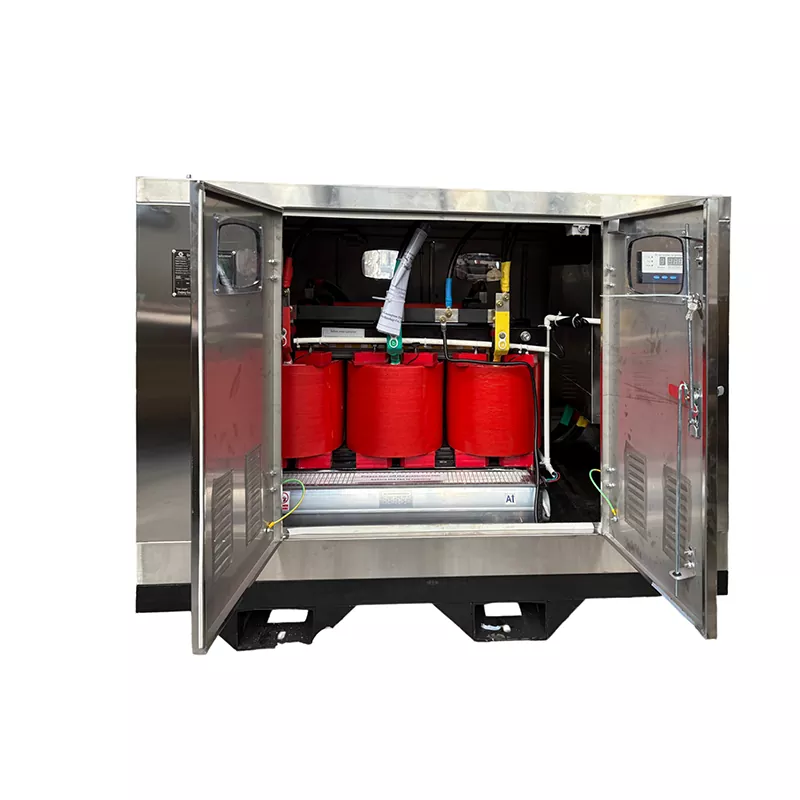
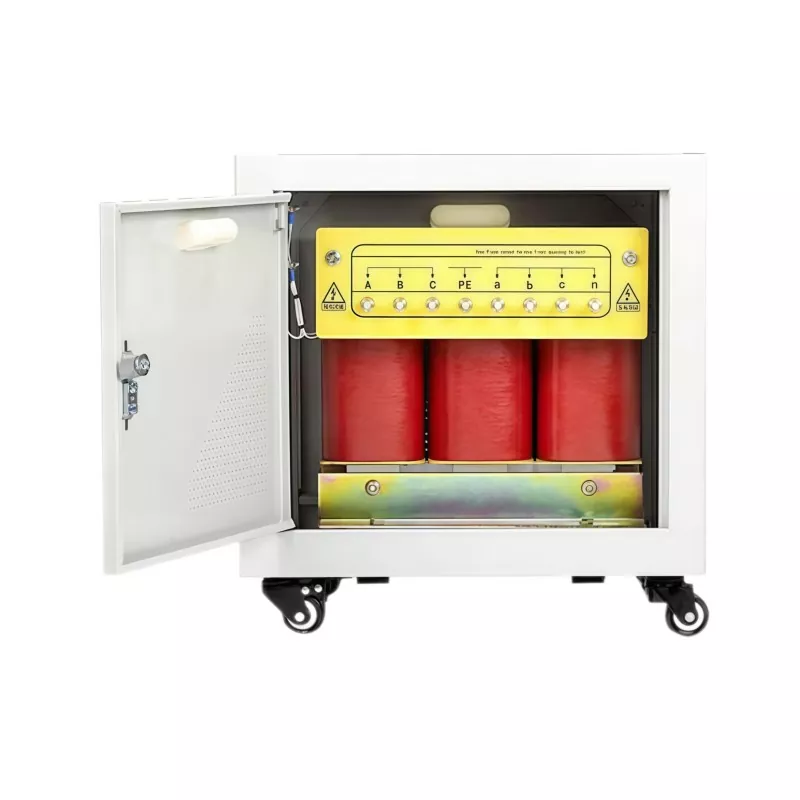
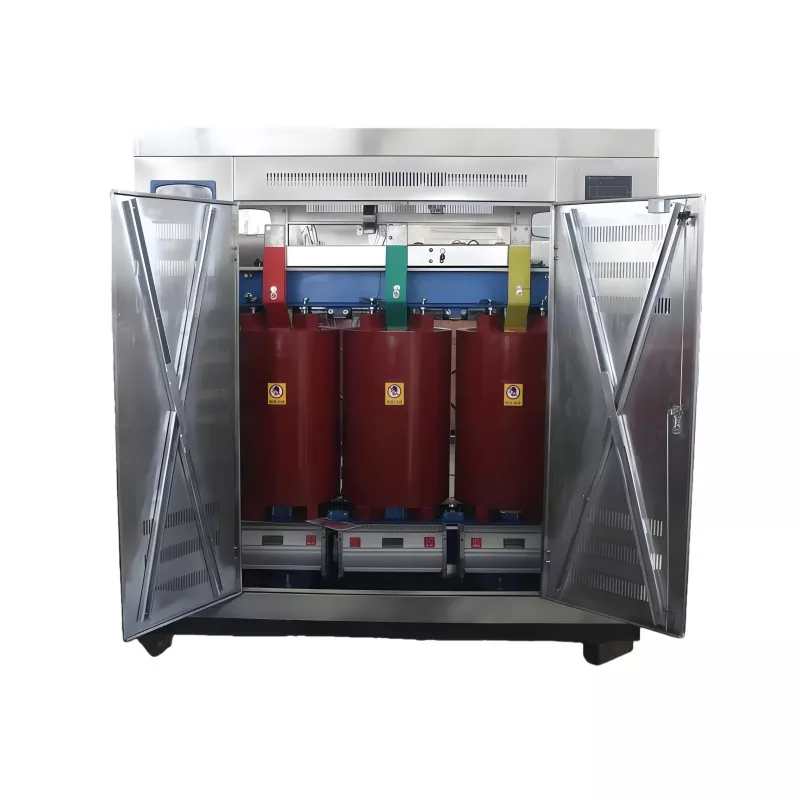
Guangbian, an experienced China power transformer manufacturer and supplier, offers the 50KVA Dry Type Isolation Transformer with MCCB to support reliable voltage conversion and practical circuit protection. Designed with 415V input, 220V output, dual molded case circuit breakers, and an IP23 stainless steel enclosure, this transformer is a solution worth evaluating for commercial and industrial electrical systems.
A 50KVA dry type isolation transformer with MCCB combines electrical isolation, voltage conversion, and integrated circuit protection in one assembly. Unlike oil-immersed equipment, its dry-type construction does not require insulating oil, making it a practical option for suitable indoor installations. The Guangbian model features a rated capacity of 50KVA, 415V input, 220V output, MCCBs on both the input and output sides, and an IP23 stainless steel enclosure. This article explains how the equipment works, its main advantages, typical applications, essential selection criteria, and installation considerations for electrical engineers, facility managers, and equipment purchasers.
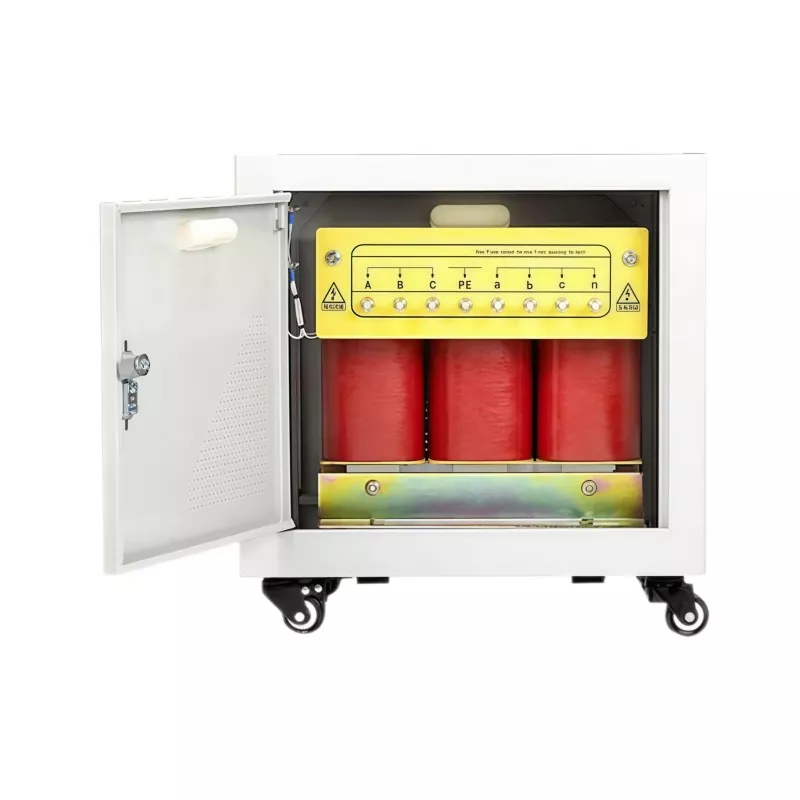
Table of Contents
- What Is a 50KVA Dry Type Isolation Transformer with MCCB?
- How Does the Transformer Work?
- Key Specifications and Technical Overview
- What Are the Main Benefits?
- Where Can This Transformer Be Used?
- How to Select the Right Transformer
- Installation and Maintenance Considerations
- Frequently Asked Questions
- Choose a Suitable Transformer for Your Project
What Is a 50KVA Dry Type Isolation Transformer with MCCB?
A 50KVA dry type isolation transformer with MCCB is an electrical device designed to transfer power between electrically separated windings while providing a specified voltage conversion ratio. Its rated apparent power is 50 kilovolt-amperes, while the integrated MCCBs provide switching and overcurrent protection according to their ratings and trip characteristics.
The term "dry type" means the transformer does not rely on insulating oil for its primary insulation and cooling arrangement. This construction can simplify certain indoor installations and eliminate the need to manage transformer insulating oil. Actual insulation materials, cooling methods, and environmental suitability depend on the specific design.
An MCCB, or molded case circuit breaker, is installed in a protective enclosure and can interrupt a circuit when specified fault or overload conditions occur. With breakers on both the incoming and outgoing sides, the assembly provides practical access to circuit isolation and protection.
For the Guangbian 50KVA Dry Type Isolation Transformer with MCCB, the published product information identifies a 415V input, 220V output, IP23 stainless steel enclosure, and breakers on both sides.
How Does the Transformer Work?
The transformer operates through electromagnetic induction. Alternating current in the primary winding produces a changing magnetic field in the core, inducing voltage in the secondary winding. The winding turns ratio determines the relationship between the input and output voltages.
For a system designed around 415V input and 220V output, the transformer provides the specified voltage conversion for compatible loads. Its isolation function separates the primary and secondary electrical circuits through the transformer windings, subject to the equipment's insulation design and grounding arrangement.
The MCCBs complement this function by providing circuit protection and a means of switching the connected circuits. However, an isolation transformer does not automatically eliminate electric shock hazards or guarantee protection against every electrical fault. Correct protective earthing, bonding, grounding arrangements, and downstream protection remain essential.
In a typical installation, the power flow follows these steps:
- The incoming supply connects to the transformer through the appropriately rated input MCCB.
- The primary winding receives the incoming AC voltage and transfers energy magnetically through the core.
- The secondary winding supplies the designed output voltage to the connected electrical system.
- The output MCCB provides a switching and protective point for the downstream circuit.
Key Specifications and Technical Overview
Reviewing the technical specifications before purchasing helps engineers confirm compatibility with the supply network, connected equipment, installation environment, and applicable electrical codes.
| Parameter | Published Specification | Why It Matters |
|---|---|---|
| Product name | 50KVA Dry Type Isolation Transformer with MCCB | Identifies the transformer configuration |
| Rated capacity | 50KVA | Defines the rated apparent power capacity |
| Input voltage | 415V | Must match the incoming electrical supply |
| Output voltage | 220V | Must match the connected load requirements |
| Transformer type | Dry type isolation transformer | Provides voltage conversion without insulating oil |
| Circuit protection | MCCBs on input and output sides | Supports circuit switching and overcurrent protection |
| Enclosure material | Stainless steel | Provides a protective housing for the assembly |
| Enclosure protection | IP23 | Indicates defined protection against solid objects and water spray |
Important purchasing note: Confirm the number of phases, operating frequency, winding material, insulation class, cooling method, impedance, efficiency, temperature rise, noise level, and exact MCCB ratings with the manufacturer. These details should not be assumed where they are not specified in the published product information.
What Are the Main Benefits?
1. Integrated Circuit Protection
MCCBs on both sides provide accessible switching and protection points for the incoming and outgoing circuits. When correctly selected and coordinated with the wider electrical system, they can help limit the consequences of overloads and short circuits. Their actual protective performance depends on breaker ratings, trip settings, and available fault current.
2. Dry-Type Construction
Because the transformer does not use insulating oil, there is no transformer oil to replace, sample, or manage. This can simplify maintenance planning for suitable applications. Nevertheless, winding condition, ventilation, electrical connections, and insulation performance still require appropriate inspection.
3. Defined Voltage Conversion
The published 415V input and 220V output configuration provides a clear starting point for projects requiring this voltage relationship. Engineers should verify whether the specified voltages refer to line-to-line or line-to-neutral measurements and confirm phase configuration before connecting equipment.
4. Protective Stainless Steel Enclosure
The stainless steel enclosure provides a durable housing for the transformer assembly. Its IP23 rating indicates protection against access to hazardous parts and solid foreign objects of the specified size, as well as water spraying at defined angles. It does not mean the enclosure is dust-tight or waterproof, so installation conditions must be assessed carefully.
5. Practical Equipment Integration
Combining the transformer and circuit breakers in one assembly can simplify equipment layout and provide convenient access to key electrical connection points. Before ordering, confirm enclosure dimensions, cable entry arrangements, terminal accessibility, and maintenance clearances with the manufacturer.
Where Can This Transformer Be Used?
A 50KVA isolation transformer may suit various commercial and industrial systems when its electrical ratings match the project requirements. Potential applications include:
- Industrial workshops: Supplying compatible machinery and auxiliary equipment that requires a different voltage from the available incoming supply.
- Commercial buildings: Supporting dedicated electrical circuits for equipment rooms and building services.
- Control and automation systems: Providing a suitable isolated supply for compatible control equipment and electrical assemblies.
- Equipment integration projects: Matching imported or specialized equipment to a compatible electrical supply configuration.
- Maintenance and retrofit projects: Replacing an existing transformer where capacity, voltage, fault protection, and installation conditions have been verified.
Application suitability depends on load characteristics, operating environment, electrical regulations, and the manufacturer's technical documentation. Sensitive electronics, medical equipment, and other specialized loads may require additional power conditioning, monitoring, or dedicated protection beyond a standard isolation transformer.
How to Select the Right Transformer
Choosing a transformer solely by its KVA rating can result in unnecessary costs or unreliable operation. A systematic technical review helps purchasers specify the correct equipment.
- Calculate the total load. Add the apparent power requirements of connected equipment and evaluate continuous demand, starting current, duty cycle, and future expansion.
- Verify input and output voltage. Confirm that 415V input and 220V output are compatible with the supply network and the intended loads.
- Confirm the phase configuration. Establish whether the system requires single-phase or three-phase operation and verify the winding connection and grounding arrangement.
- Review the MCCBs. Confirm rated current, breaking capacity, trip characteristics, and coordination with upstream and downstream protective devices.
- Check the installation environment. Assess ambient temperature, humidity, ventilation, dust, water exposure, and available installation space.
- Request missing technical data. Obtain the datasheet, wiring diagram, dimensional drawing, applicable test documentation, and installation instructions.
For an initial reference, the approximate full-load current of a balanced three-phase 50KVA transformer can be calculated using the formula I = S / (√3 × V). At 415V, this gives approximately 69.6A on the 415V side. This is a theoretical estimate, not a substitute for the manufacturer's rated-current data or protective-device sizing. The actual current depends on the transformer's phase configuration and rated voltages.
Installation and Maintenance Considerations
Correct installation is necessary to obtain reliable performance throughout the equipment's service life. Qualified electrical professionals should follow the approved wiring diagram, applicable electrical codes, and the manufacturer's installation instructions.
- Provide adequate ventilation: Maintain the clearances required for heat dissipation and safe maintenance access.
- Verify protective earthing: Connect the enclosure and grounding system according to the approved design and local regulations.
- Inspect all connections: Check terminal tightness and cable suitability using the manufacturer's specified procedures and torque values.
- Test before energizing: Verify insulation resistance, winding continuity where appropriate, voltage configuration, protective devices, and grounding arrangements.
- Maintain a regular inspection schedule: Check for abnormal noise, overheating, dust accumulation, loose connections, and visible damage.
- Follow safe isolation procedures: De-energize and verify the absence of voltage before maintenance, using appropriate lockout/tagout practices.
Maintenance frequency should reflect operating conditions, manufacturer guidance, and the consequences of equipment failure. Any unusual temperature rise, repeated breaker tripping, or insulation deterioration should be investigated by qualified personnel before the transformer returns to service.
Frequently Asked Questions
1. What is a 50KVA Dry Type Isolation Transformer with MCCB used for?
It transfers electrical power between isolated windings, converts voltage according to its design, and incorporates circuit breakers for switching and overcurrent protection. It may be used in suitable commercial and industrial applications where its ratings match the connected loads.
2. What are the input and output voltages of the Guangbian model?
The published product information specifies a 415V input and a 220V output. Buyers should confirm phase configuration, frequency, voltage measurement conventions, and any project-specific requirements before placing an order.
3. Why are MCCBs installed on both sides?
The input MCCB provides a switching and protection point for the incoming circuit, while the output MCCB serves the outgoing circuit. Correct selection and coordination are essential; the presence of breakers alone does not guarantee complete system protection.
4. Is a dry type transformer suitable for indoor installation?
Dry type transformers are often used indoors because they do not require insulating oil. However, suitability depends on the unit's construction, heat dissipation, enclosure rating, environmental conditions, and local electrical requirements.
5. What does IP23 mean for this transformer?
IP23 identifies protection against access to hazardous parts and specified solid objects, together with protection against water spraying at defined angles. It should not be interpreted as full dustproof or waterproof protection.
6. Can Guangbian customize the transformer?
Guangbian describes customization capabilities for its transformer range. Buyers should submit the required input and output voltages, phase configuration, frequency, installation conditions, load information, and protective-device requirements to confirm whether the requested configuration is available.
7. What information should I request before purchasing?
Request a complete datasheet, wiring diagram, dimensional drawing, MCCB specifications, applicable test reports, delivery schedule, warranty terms, and installation guidance. These documents help establish whether the proposed transformer meets the project's technical and commercial requirements.
Choose a Suitable Transformer for Your Project
A 50KVA Dry Type Isolation Transformer with MCCB can provide a practical combination of voltage conversion, electrical isolation, and integrated circuit protection when correctly specified and installed. The Guangbian model's published 415V input, 220V output, dual-sided MCCBs, and IP23 stainless steel enclosure give project engineers a useful starting point for evaluating compatibility. Before finalizing a purchase, verify the full electrical datasheet, phase configuration, protective-device ratings, and applicable compliance requirements. If you are sourcing a dependable transformer solution for an industrial, commercial, or equipment integration project, visit the Guangbian product page and contact us to discuss your specifications, customization options, pricing, and delivery requirements.
Related News
- Why Is a 50KVA Dry Type Isolation Transformer with MCCB a Smarter Choice for Reliable Power Protection
- How Can a 37.5KVA Pole-Mounted Transformer Improve Reliable Power Distribution
- How Can a 150KVA Dry Type Isolation Transformer Improve Safe and Flexible Power Distribution
- Why Is a 37.5KVA Pole-Mounted Transformer a Smart Choice for Reliable Overhead Power Distribution
- How Can a 167KVA Pole-Mounted Transformer Deliver More Reliable and Cost-Effective Power Distribution
- Why Is a 167KVA Pole-Mounted Transformer a Smart Choice for Modern Distribution Networks
Leave me a message