English
- English
- Español
- Português
- русский
- Français
- 日本語
- Deutsch
- tiếng Việt
- Italiano
- Nederlands
- ภาษาไทย
- Polski
- 한국어
- Svenska
- magyar
- Malay
- বাংলা ভাষার
- Dansk
- Suomi
- हिन्दी
- Pilipino
- Türkçe
- Gaeilge
- العربية
- Indonesia
- Norsk
- تمل
- český
- ελληνικά
- український
- Javanese
- فارسی
- தமிழ்
- తెలుగు
- नेपाली
- Burmese
- български
- ລາວ
- Latine
- Қазақша
- Euskal
- Azərbaycan
- Slovenský jazyk
- Македонски
- Lietuvos
- Eesti Keel
- Română
- Slovenski
- मराठी
- Srpski језик

How Can a 150KVA Dry Type Isolation Transformer Deliver Safer and More Reliable Power for Industrial Applications
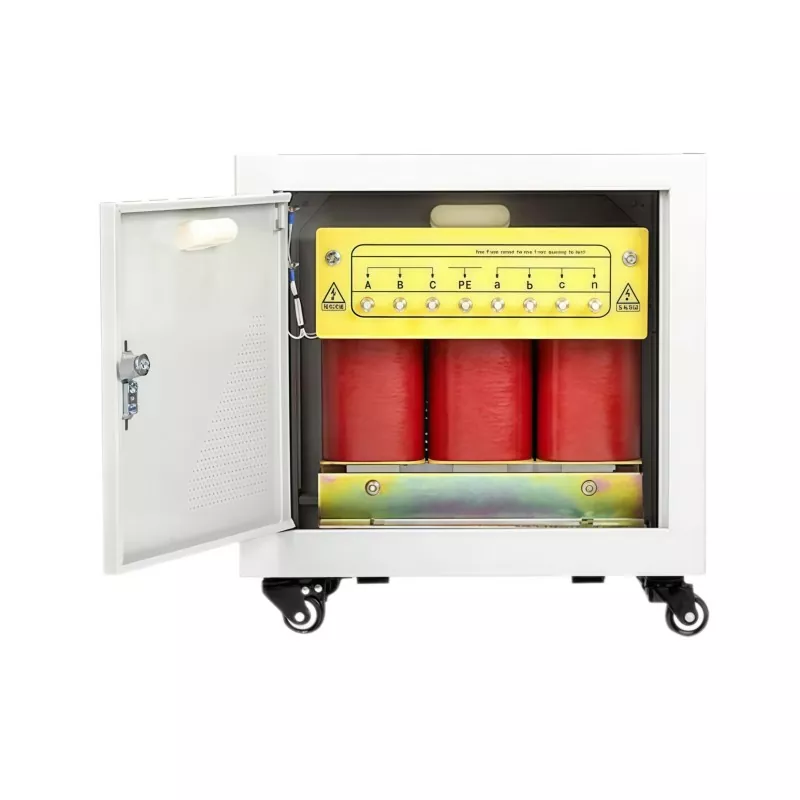
Reliable electrical power is essential for modern industrial facilities, construction projects, and commercial infrastructure. GUANGBIAN provides the 150KVA Dry Type Isolation Transformer as a practical power distribution solution designed to support different voltage requirements, improve electrical isolation, and deliver stable power for demanding working environments. With a 480V input and 400V three-phase / 230V single-phase output, this transformer combines full copper windings, a Delta-Star connection, automatic fan cooling, and MCCB protection to meet the requirements of various industrial and construction applications.
Article Summary: This article explains how a 150KVA dry type isolation transformer works, its major technical specifications, the advantages of copper windings and Delta-Star connections, and its applications in construction and industrial power distribution. It also provides practical selection considerations, a technical comparison table, and answers to common questions about installation, cooling, protection, and customization.
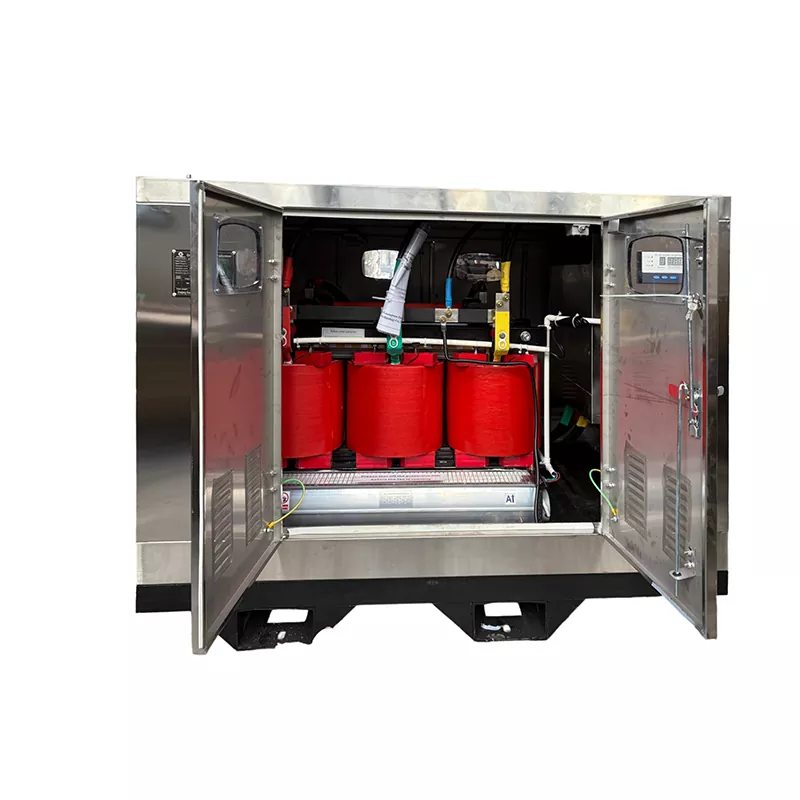
Table of Contents
- What Is a 150KVA Dry Type Isolation Transformer?
- How Does the Transformer Work?
- Key Technical Specifications
- What Are the Main Advantages?
- Where Can This Transformer Be Used?
- How to Select the Right Transformer
- Installation and Maintenance Considerations
- Manufacturing and Customization Capabilities
- Frequently Asked Questions
- Conclusion
What Is a 150KVA Dry Type Isolation Transformer?
A 150KVA dry type isolation transformer is an electrical device that transfers energy between two separate winding systems through electromagnetic induction. Unlike oil-immersed transformers, dry type models use an air-based cooling arrangement and solid electrical insulation rather than insulating oil as their primary insulation medium.
The 150KVA rating represents the transformer's rated apparent power capacity. It is suitable for electrical distribution systems that require a combination of voltage conversion and galvanic isolation between primary and secondary circuits.
The GUANGBIAN 150KVA model is designed with the following electrical configuration:
- Primary input: 480V three-phase line voltage.
- Secondary output: 400V three-phase line voltage.
- Single-phase output: 230V through the secondary neutral connection.
- Rated frequency: 60Hz.
- Rated capacity: 150kVA.
- Winding material: Full copper.
This configuration allows industrial users to distribute different voltage levels from one transformer, provided that the connected loads, neutral arrangement, and distribution circuits are properly designed.
For projects requiring both voltage conversion and electrical separation, this type of equipment can simplify the overall power distribution arrangement. Its dry type construction also avoids the need for liquid insulating oil management.
How Does the Transformer Work?
A dry type isolation transformer operates according to the principle of electromagnetic induction. When alternating current flows through the primary winding, it generates a changing magnetic field in the transformer core. This magnetic field induces voltage in the secondary winding, allowing electrical energy to be transferred without a direct conductive connection between the two circuits.
For the GUANGBIAN 150KVA configuration, the primary winding receives 480V three-phase power and the secondary winding delivers 400V three-phase power. The secondary winding is connected in a star configuration, providing a neutral point that can support 230V single-phase distribution when the system is appropriately configured.
Understanding the Delta-Star Connection
The Delta-Star (Δ-Y) winding arrangement offers several practical characteristics for industrial power systems:
- Delta primary: Provides a closed winding path that allows certain triplen harmonic currents to circulate within the delta winding.
- Star secondary: Provides a neutral point for suitable single-phase distribution.
- Three-phase distribution: Supports equipment designed for a 400V three-phase supply.
- Single-phase distribution: Allows 230V loads to be supplied between an appropriate phase conductor and neutral.
The actual grounding method, neutral connection, and protection arrangement must be determined according to the project's electrical design and applicable local standards.
What Are the Key Technical Specifications?
Understanding the technical specifications is essential when evaluating a transformer for a new industrial installation. The following table summarizes the main configuration of the GUANGBIAN 150KVA dry type isolation transformer.
| Technical Parameter | Specification |
|---|---|
| Product Name | 150KVA Dry Type Isolation Transformer |
| Rated Capacity | 150 kVA |
| Transformer Type | Dry Type Isolation Transformer |
| Number of Phases | Three Phase |
| Input Voltage | 480V |
| Output Voltage | 400V Three Phase / 230V Single Phase |
| Rated Frequency | 60Hz |
| Winding Material | Full Copper |
| Winding Connection | Delta-Star (Δ-Y) |
| Temperature Rise | 100°C (Winding) |
| Insulation Class | Class F |
| Enclosure Protection | IP43 |
| Cooling Method | Automatic Fan Cooling |
| Noise Level | Less Than 60 dB at 1 Meter |
| Protection Configuration | MCCB at Incoming and Outgoing Terminals, with Additional MCCBs in the Project Configuration |
| Enclosure Material | Stainless Steel for the Featured Project Configuration |
These specifications make the transformer suitable for projects requiring a combination of industrial voltage conversion, electrical isolation, and multi-voltage distribution.
For engineering reference, the approximate full-load line current at 400V three-phase output is 216.5A, while the corresponding 480V primary current is approximately 180.4A. These are theoretical values calculated at rated apparent power. Actual operating currents, breaker ratings, cable sizes, and protection settings must be determined through the final electrical design.
What Are the Main Advantages of a 150KVA Dry Type Isolation Transformer?
1. Full Copper Windings for Electrical Performance
The transformer uses full copper windings. Copper has relatively low electrical resistivity, making it a widely used conductor material in power transformer manufacturing.
When properly designed and manufactured, copper windings help control conductor losses and support reliable electrical performance. Their thermal behavior also needs to be evaluated alongside insulation, ventilation, ambient temperature, and actual loading conditions.
2. Flexible 400V and 230V Power Distribution
One of the practical advantages of this 150KVA transformer is its ability to support different voltage requirements through its secondary configuration.
For example:
- 400V three-phase power can supply industrial machinery, pumps, cranes, and concrete mixers.
- 230V single-phase power can support lighting, office equipment, portable tools, and auxiliary electrical systems.
- Different load groups can be organized through appropriately designed downstream distribution circuits.
This arrangement can reduce the need for separate voltage conversion equipment in applications where both voltage levels are required.
3. Automatic Fan Cooling and Temperature Monitoring
Temperature management is important for maintaining transformer performance, particularly in industrial environments where electrical demand changes throughout the working day.
The featured configuration uses winding temperature sensors to monitor operating conditions. When the preset temperature threshold is reached, the automatic cooling fans start to increase heat dissipation.
This arrangement helps manage thermal conditions during periods of higher loading. Proper ventilation and sufficient installation clearance are still necessary to ensure effective cooling.
4. IP43 Enclosure Protection
The featured transformer uses a stainless-steel enclosure with an IP43 protection rating.
Under the IEC 60529 classification system:
- The first digit, 4, indicates protection against solid foreign objects larger than 1mm.
- The second digit, 3, indicates protection against water spray under the specified IPX3 test conditions.
This protection level can be appropriate for selected industrial and construction environments. However, IP43 does not mean that the transformer is completely dust-tight or waterproof. Installation conditions should be evaluated to avoid direct exposure to heavy rain, standing water, and excessive dust accumulation.
5. MCCB Protection for Electrical Distribution
Molded Case Circuit Breakers (MCCBs) are used at the incoming and outgoing terminals. The featured project configuration also includes two additional MCCBs for downstream circuit protection.
These breakers help provide overcurrent protection and circuit isolation. Their ratings and trip characteristics should be coordinated with connected loads, conductor sizes, available fault current, and the overall protection system.
Where Can a 150KVA Dry Type Isolation Transformer Be Used?
The combination of voltage conversion, electrical isolation, and flexible secondary distribution makes a 150KVA dry type isolation transformer suitable for several industrial and infrastructure applications.
Construction Sites
Construction projects frequently require power for different types of machinery and temporary electrical installations. A 480V input and 400V/230V output configuration can support multiple equipment categories through a properly designed distribution system.
Typical applications include:
- Construction cranes and lifting equipment.
- Concrete mixers and material handling machinery.
- Welding equipment and industrial pumps.
- Temporary site lighting systems.
- Portable tools and site office equipment.
Industrial Manufacturing Facilities
Manufacturing plants may operate production machinery, auxiliary equipment, and control-related electrical systems with different voltage requirements. A suitable isolation transformer can provide the required secondary voltage while separating the upstream and downstream electrical circuits.
Commercial and Infrastructure Projects
Commercial buildings, infrastructure developments, and engineering facilities may also require transformers that support multiple categories of electrical loads. The 150KVA capacity can serve selected distribution requirements when the connected demand and load characteristics are properly calculated.
For every application, the final transformer capacity should be determined by actual load demand rather than simply adding the rated power of all connected machines.
How to Select the Right 150KVA Dry Type Isolation Transformer
Choosing the correct transformer requires more than matching the rated capacity. Electrical engineers and purchasing teams should evaluate the following factors before placing an order.
1. Confirm Input and Output Voltage
Check the available supply voltage and the voltage requirements of downstream equipment. A 480V to 400V/230V configuration is suitable only when it matches the project's electrical distribution requirements.
2. Calculate the Actual Load Demand
Consider the total connected load, expected simultaneous operation, power factor, load factor, and future expansion requirements. Motors, compressors, welding machines, and other equipment may produce significant starting or temporary peak currents.
3. Check the Operating Frequency
Transformer frequency must match the electrical system. The featured GUANGBIAN configuration is designed for 60Hz operation. Projects using 50Hz systems should confirm the appropriate transformer design before production.
4. Evaluate the Installation Environment
Ambient temperature, ventilation, humidity, dust, and potential water exposure all influence the selection of enclosure protection and cooling arrangements.
5. Confirm Protection and Grounding Requirements
Breaker coordination, cable sizing, grounding, neutral arrangements, and fault protection should be considered as part of the complete electrical system design.
A practical procurement checklist includes:
- Rated capacity and expected maximum demand.
- Primary and secondary voltage requirements.
- Three-phase and single-phase load distribution.
- Operating frequency and winding connection.
- Insulation class and temperature rise.
- Enclosure material and IP protection rating.
- Cooling arrangement and installation clearance.
- MCCB ratings and protection coordination.
- Applicable electrical standards and testing requirements.
Installation and Maintenance Considerations
Correct installation is essential for achieving reliable transformer operation. Although dry type transformers do not require insulating oil management, they still need regular inspection and appropriate environmental conditions.
Several important maintenance practices should be included in the operating plan:
- Ventilation inspection: Keep air inlets and outlets unobstructed to maintain effective heat dissipation.
- Temperature monitoring: Check temperature sensor readings and confirm that automatic cooling fans operate correctly.
- Electrical connection inspection: Examine terminals, cable connections, and grounding points for looseness or signs of overheating.
- Enclosure cleaning: Remove accumulated dust and contaminants using suitable maintenance procedures.
- Protection testing: Inspect MCCBs and verify that the protection settings remain consistent with the approved electrical design.
- Insulation inspection: Conduct appropriate insulation resistance and other electrical tests according to manufacturer recommendations and maintenance requirements.
All inspection and maintenance work should be performed by qualified electrical personnel following appropriate isolation and safety procedures.
Manufacturing and Customization Capabilities of GUANGBIAN
Different industrial projects have different electrical requirements. A standard transformer configuration may not always meet the voltage, environmental, or protection needs of a specific installation.
GUANGBIAN manufactures power transformers according to project-specific electrical requirements. Its 150KVA dry type isolation transformer demonstrates how voltage conversion, copper windings, enclosure protection, and cooling arrangements can be integrated into one customized power distribution solution.
The featured 150KVA unit was configured for a construction project in Saudi Arabia, with a stainless-steel enclosure, IP43 protection, Delta-Star connection, automatic fan cooling, and additional MCCBs.
Depending on project requirements, customization may cover:
- Primary and secondary voltage configurations.
- Rated frequency and phase arrangements.
- Copper winding specifications.
- Winding connection configurations.
- Enclosure materials and protection ratings.
- Natural or forced-air cooling arrangements.
- MCCB configuration and downstream protection.
Manufacturing inspection and factory testing are carried out according to the agreed technical specification and applicable standards. Test records and third-party inspection can also be arranged when required by the project.
For more information about the company's product range, buyers can explore GUANGBIAN's power transformer solutions and review its 150KVA Dry Type Isolation Transformer configuration.
Frequently Asked Questions
1. What is the primary function of a 150KVA dry type isolation transformer?
Its primary function is to transfer electrical energy between separate primary and secondary windings while providing voltage conversion and galvanic isolation. It can support industrial power distribution systems that require reliable secondary voltage supplies.
2. What are the input and output voltages of the GUANGBIAN 150KVA transformer?
The featured configuration uses a 480V three-phase input and provides 400V three-phase and 230V single-phase output. Other voltage combinations may be available through project-specific customization.
3. Can this transformer supply both three-phase and single-phase equipment?
Yes. Its Delta-Star winding configuration provides a 400V three-phase secondary supply and a neutral point that supports 230V single-phase distribution. The connected loads must be properly balanced and remain within the transformer's rated capacity.
4. Why are copper windings used in this transformer?
Copper offers relatively low electrical resistivity and good electrical conductivity. Properly designed copper windings help control conductor losses and support the transformer's electrical and thermal performance.
5. What does the IP43 protection rating mean?
IP43 indicates protection against solid foreign objects larger than 1mm and water spray under the specified IPX3 test conditions. It is not a fully dustproof or waterproof rating, so installation conditions must be considered carefully.
6. How does the automatic cooling system work?
Temperature sensors monitor winding operating conditions. When the preset temperature threshold is reached, the control system activates the cooling fans to increase heat dissipation. The cooling arrangement helps manage temperature during changing load conditions.
7. Is a 150KVA transformer suitable for construction projects?
It can be suitable for construction projects requiring a combination of three-phase machinery power and single-phase auxiliary power. However, the final capacity selection must consider simultaneous loads, motor starting currents, welding equipment, power factor, and temporary peak demand.
8. Can GUANGBIAN customize the transformer specifications?
Yes. GUANGBIAN can configure transformer specifications according to project requirements, including input and output voltage, frequency, winding arrangement, enclosure design, cooling method, and protection configuration. All technical details should be confirmed before production.
Conclusion
A properly specified 150KVA Dry Type Isolation Transformer can provide an effective solution for industrial facilities and construction projects that require voltage conversion, electrical isolation, and flexible power distribution. With its 480V input, 400V three-phase and 230V single-phase output, full copper windings, Delta-Star connection, automatic fan cooling, and IP43 enclosure, the GUANGBIAN configuration addresses several important requirements of modern electrical installations.
Selecting the right transformer involves more than comparing rated capacity and purchase price. Voltage compatibility, load calculations, environmental conditions, cooling performance, protection coordination, and long-term maintenance should all be evaluated before procurement. If you are looking for a reliable transformer manufacturer or need a customized power distribution solution, contact us at GUANGBIAN to discuss your project requirements, request detailed technical specifications, and obtain a professional quotation for your next electrical engineering project.
Related News
- How Do You Select a 167KVA Pole-Mounted Transformer for Efficient and Reliable Power Distribution
- How Can a 50KVA Dry Type Isolation Transformer with MCCB Improve Electrical Safety and Power Reliability
- Why Is a 50KVA Dry Type Isolation Transformer with MCCB a Smarter Choice for Reliable Power Protection
- How Can a 37.5KVA Pole-Mounted Transformer Improve Reliable Power Distribution
- How Can a 150KVA Dry Type Isolation Transformer Improve Safe and Flexible Power Distribution
- Why Is a 37.5KVA Pole-Mounted Transformer a Smart Choice for Reliable Overhead Power Distribution
Leave me a message