English
- English
- Español
- Português
- русский
- Français
- 日本語
- Deutsch
- tiếng Việt
- Italiano
- Nederlands
- ภาษาไทย
- Polski
- 한국어
- Svenska
- magyar
- Malay
- বাংলা ভাষার
- Dansk
- Suomi
- हिन्दी
- Pilipino
- Türkçe
- Gaeilge
- العربية
- Indonesia
- Norsk
- تمل
- český
- ελληνικά
- український
- Javanese
- فارسی
- தமிழ்
- తెలుగు
- नेपाली
- Burmese
- български
- ລາວ
- Latine
- Қазақша
- Euskal
- Azərbaycan
- Slovenský jazyk
- Македонски
- Lietuvos
- Eesti Keel
- Română
- Slovenski
- मराठी
- Srpski језик
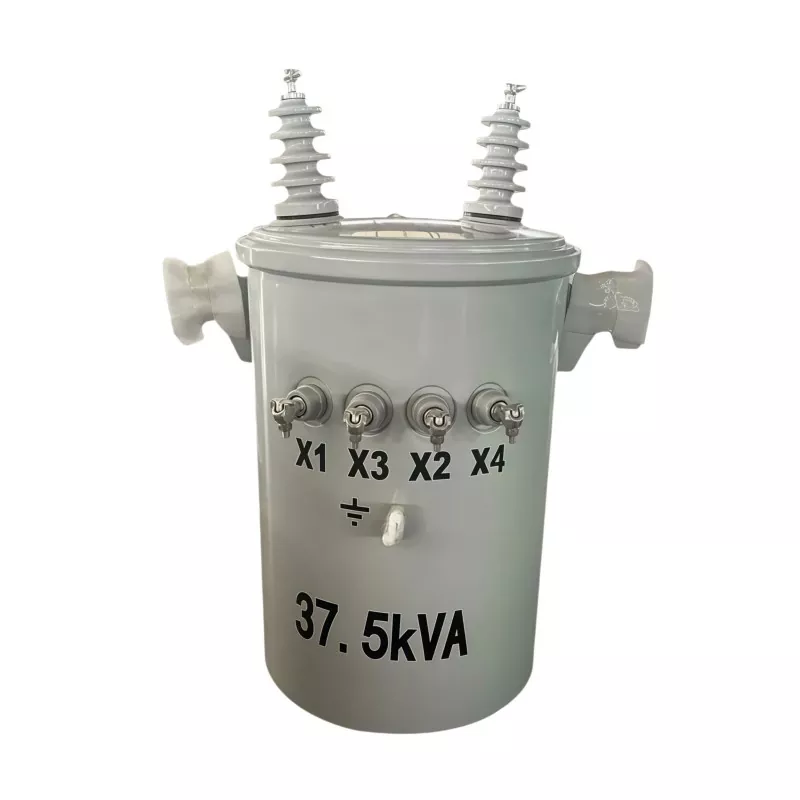
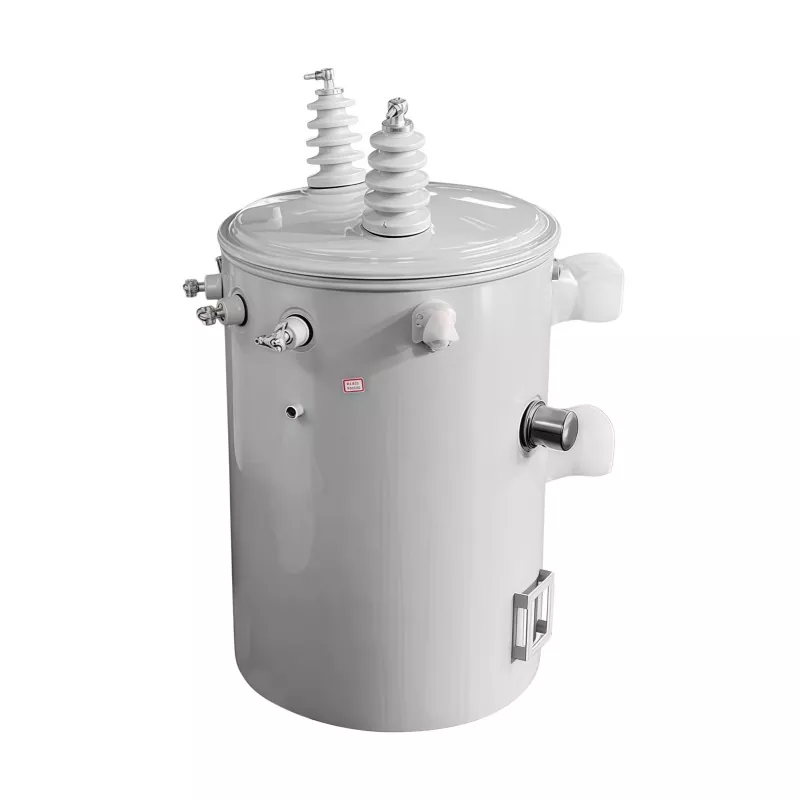
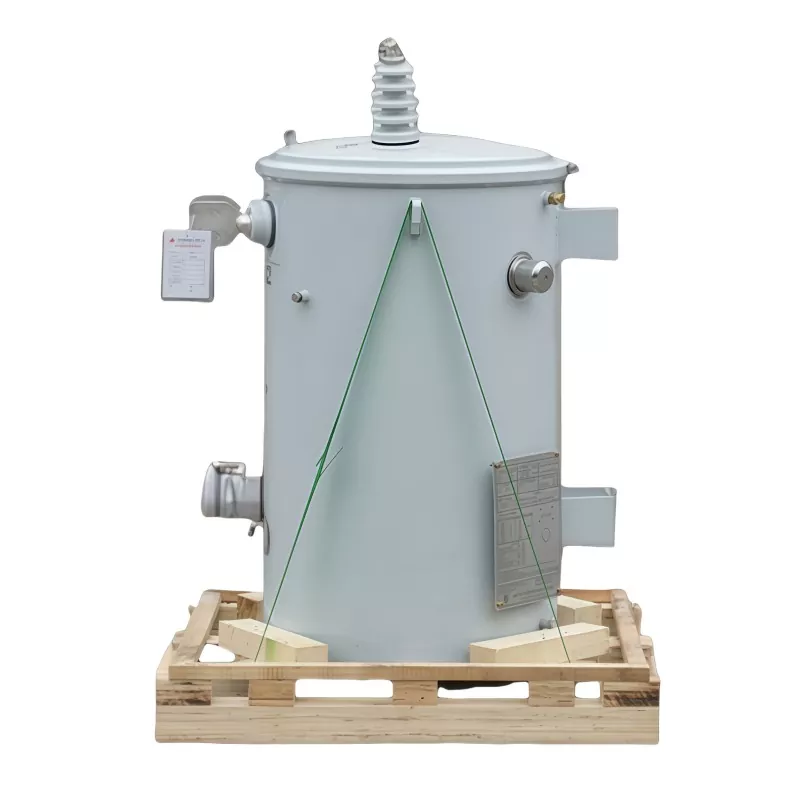
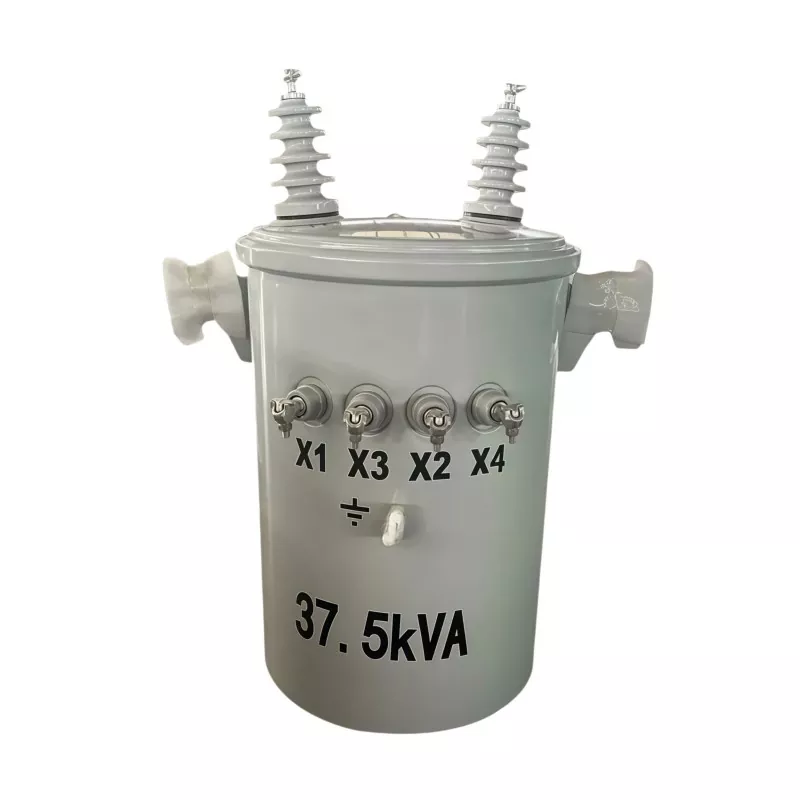
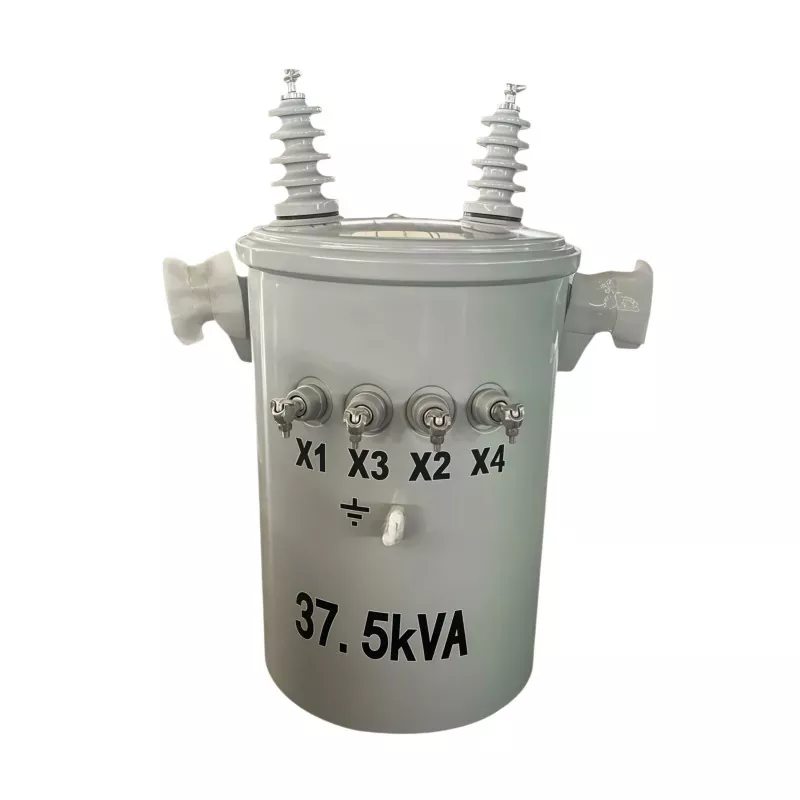
37.5KVA Pole-Mounted Transformer
As a China pole-mounted transformer manufacturer and supplier, Guangbian provides factory-direct pricing and wholesale support for global buyers. This 37.5KVA pole-mounted transformer is widely used in rural electrification projects, utility power grids, commercial distribution networks, and industrial power supply systems.
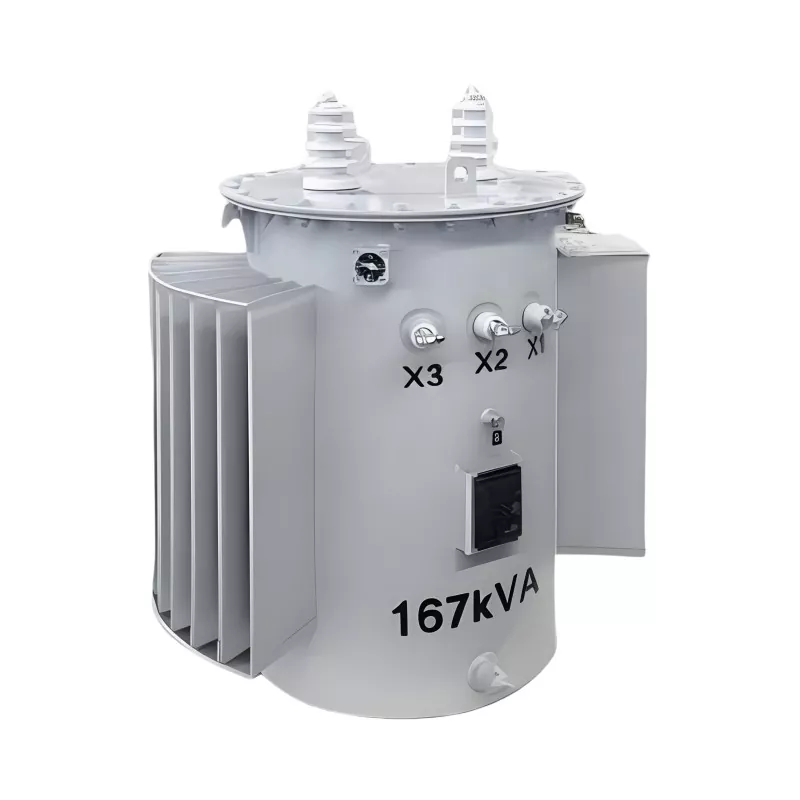
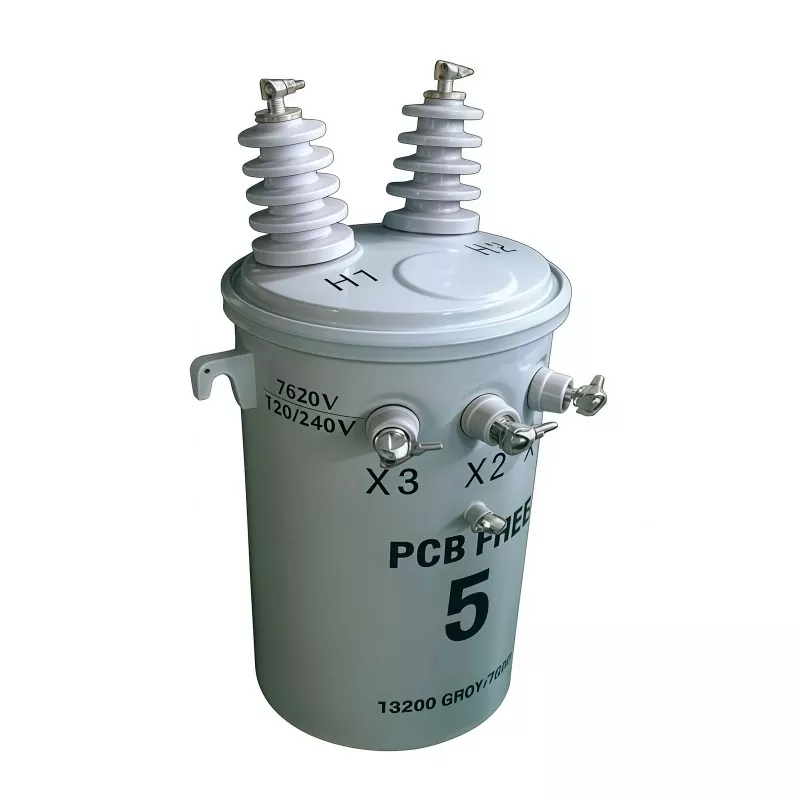
A 37.5KVA Pole-Mounted Transformer is an electrical distribution transformer installed on utility poles to reduce medium-voltage electricity from power lines into lower usable voltage for residential, commercial, agricultural, and light industrial power applications. With a rated capacity of 37.5 kilovolt-amperes (KVA), it is commonly used in overhead power distribution systems to provide stable, efficient, and reliable electricity supply in urban and rural areas. Its compact pole-mounted design helps save ground space, simplifies installation, and supports cost-effective power distribution networks.
Working Principle
A pole-mounted transformer operates based on the principle of electromagnetic induction.
High Voltage Input
Medium or high voltage electricity is supplied to the primary winding through overhead distribution lines.
Magnetic Field Generation
When alternating current flows through the primary winding, it creates a changing magnetic field within the transformer core.
Voltage Transformation
This magnetic field induces voltage in the secondary winding. Based on the turns ratio between windings, the voltage is stepped down to a lower usable level.
Stable Output Supply
The transformed low voltage electricity is then delivered to residential, commercial, or industrial users with stable performance.
Applications
A 37.5KVA pole-mounted transformer is designed for low to medium load distribution systems, efficiently stepping down medium voltage electricity to usable low voltage for end users. It is widely used in the following scenarios:
Residential Power Distribution
Ideal for residential neighborhoods, rural houses, and small communities, providing stable electricity for lighting, home appliances, and daily power consumption.
Rural Electrification Projects
Commonly used in rural grid expansion and remote area power supply systems due to its simple installation and low maintenance requirements.
Agricultural Power Systems
Suitable for farms, irrigation systems, livestock facilities, and greenhouses, powering water pumps, motors, and agricultural machinery.
Small Commercial Facilities
Widely applied in small offices, retail stores, gas stations, workshops, and storage facilities for stable commercial electricity supply.
Light Industrial Applications
Used in small factories, processing workshops, and maintenance facilities with moderate power demand.
Temporary Power Supply Projects
Common in construction sites and temporary outdoor engineering projects requiring flexible and reliable power distribution.
Let's walk through how GUANGBIAN actually builds one.
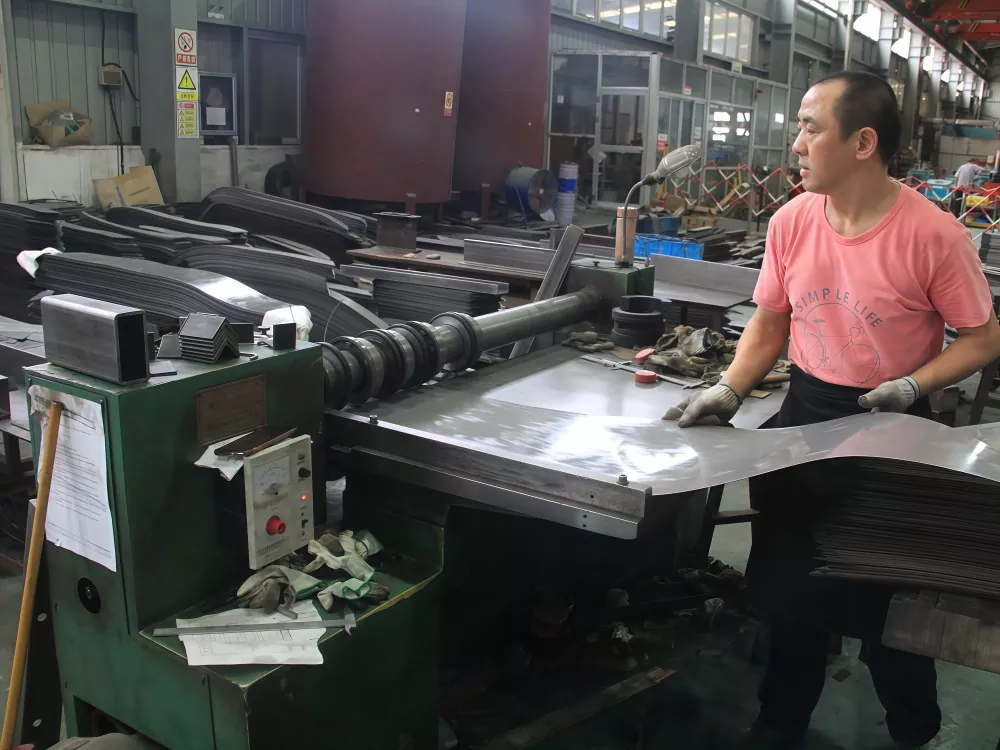
Step 1: Core fabrication
The core starts with grain-oriented silicon steel. Great magnetic properties, but it's brittle—you can't stamp it like regular steel.
We cut the sheets to specific dimensions, then stack them layer by layer on specialized equipment. Each layer's joints are offset from the one below, which keeps air gaps in the magnetic path to a minimum. Once we reach the target thickness, the whole stack gets clamped tight and vacuum-impregnated to lock everything in place.
The transformer manufacturing process hinges on this step. Stack factor, surface flatness, clamping pressure—miss any of these, and no-load losses will run over spec.
Step 2: Winding
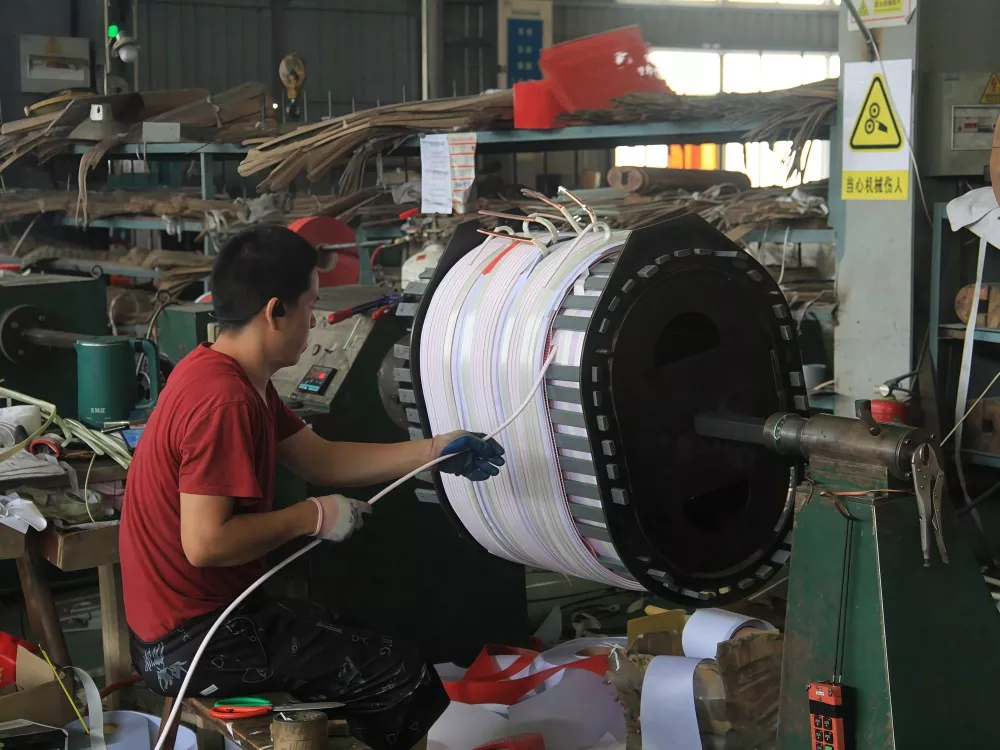
This is where it gets critical. The winding shop runs at controlled temperature and humidity. Operators sit at winding machines, feeding copper wire onto the coil former, turn by turn, keeping it even and tight.
GUANGBIAN's 37.5 kva pole mounted transformer uses pure copper winding—not aluminum. We manufacture these at our China facility, and every detail matters: wire gauge, number of turns, layering pattern. Wind too loose, the coil lacks mechanical strength. Wind too tight, you crush the insulation.
Once wound, the coil goes through vacuum impregnation. Insulating varnish seeps into every gap, locking the turns in place and giving the winding both dielectric strength and better heat dissipation.
Step 3: Core and coil assembly
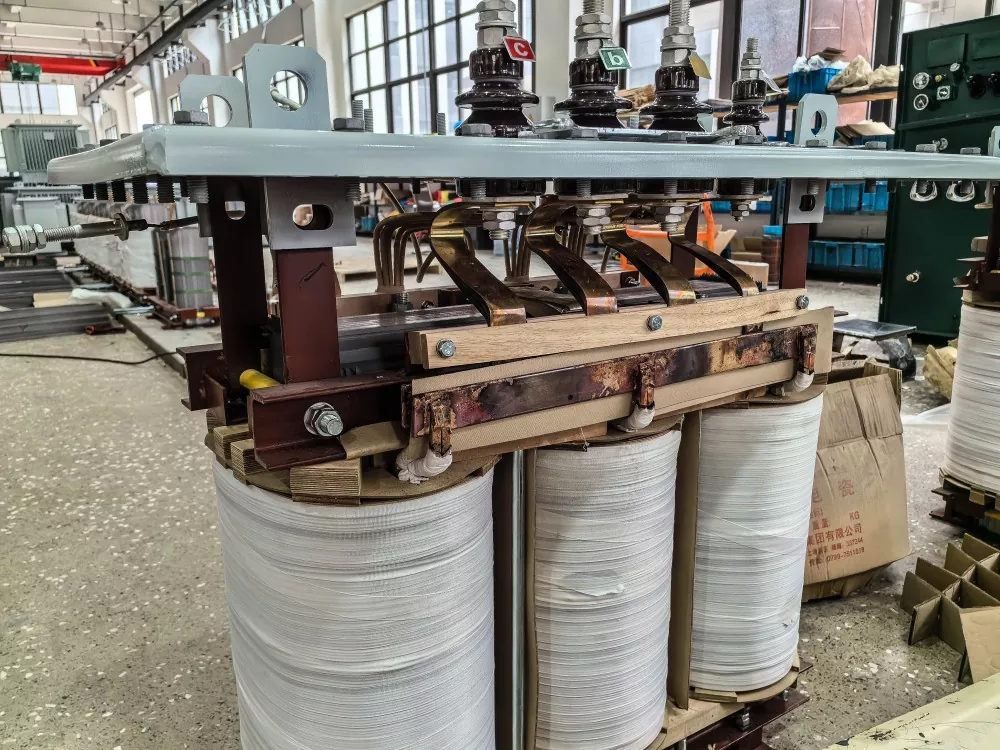
The wound coils slide onto the core legs. Insulation spacers go in, leads get connected, and the whole active part takes shape. Clearances between windings have to meet standard—no shortcuts here.
Once assembled, the active part goes through transformer factory testing right away: withstanding voltage test and DC resistance measurement. Anything off, even slightly, gets caught at this stage.
Step 4: Tank assembly
Active part passes inspection? It gets lowered into the tank. The tank is the transformer's shell—filled with insulating oil that does double duty: dielectric barrier and coolant.
We use high-grade mineral insulating oil at GUANGBIAN. Dehydrated and degassed before it goes in. The tank itself is welded construction, and every weld seam gets X-ray inspected. No leaks allowed.
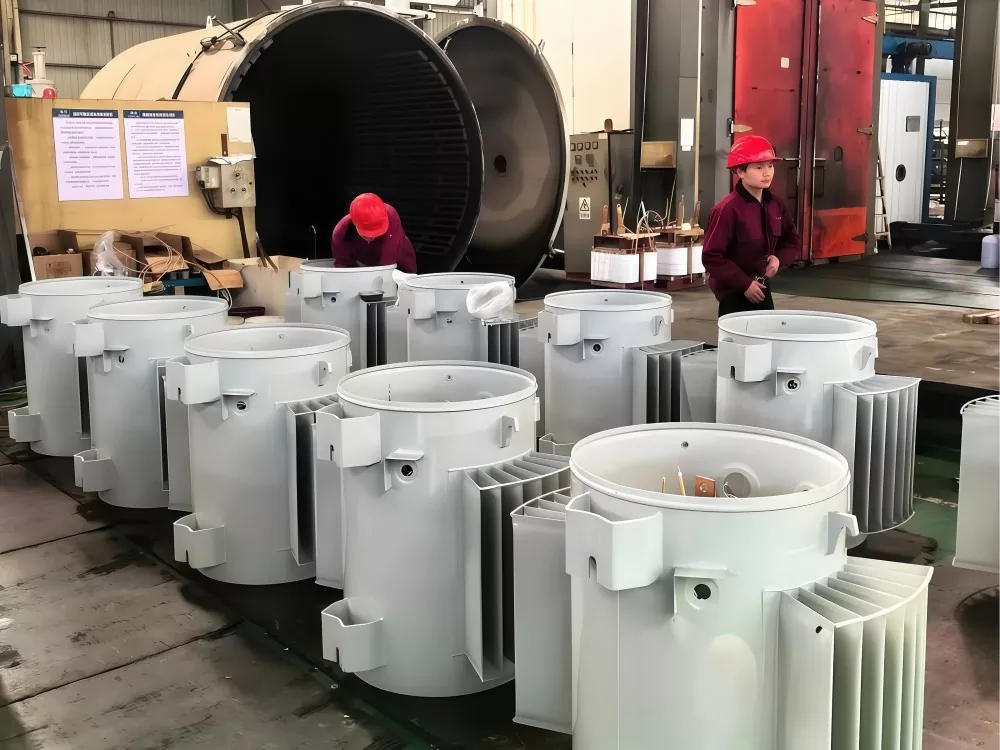
Step 5: Final testing
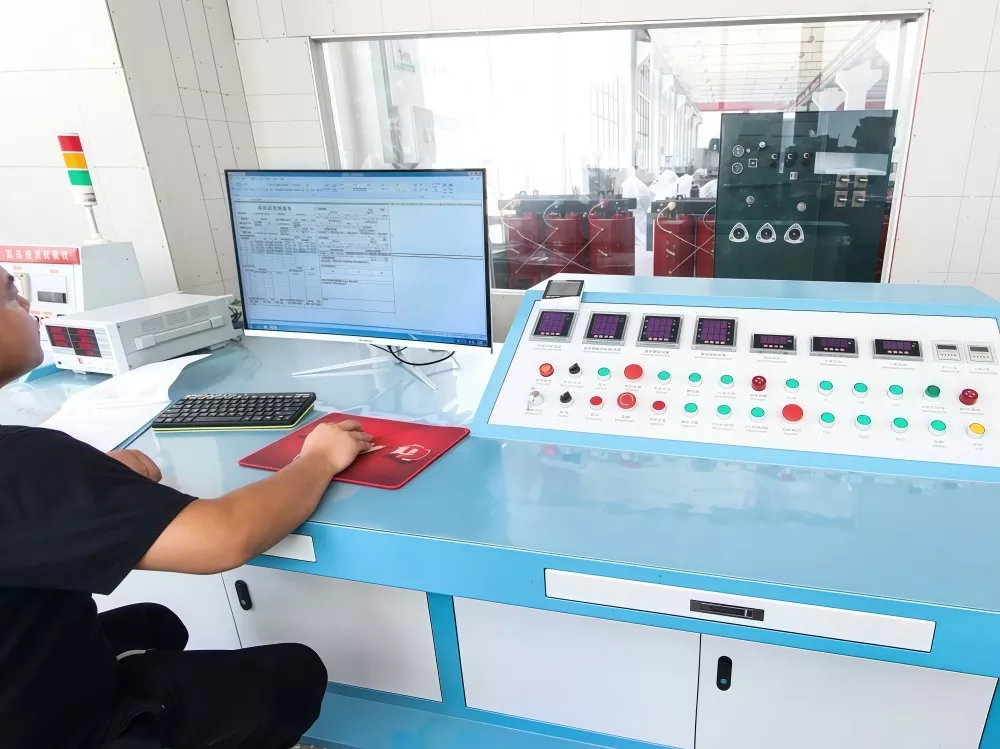
Before any unit leaves the factory, it runs through a full test routine:
No-load test: We power it up with nothing connected on the secondary side. Current and loss readings tell us if the core is behaving. On a 37.5 kva pole mounted transformer, no-load loss has to come in at ≤113W or below.
Load test: Put full rated load on it and watch the numbers. Load loss stays at ≤413W, and the temperature climb doesn't go past 65°C.
Withstand voltage test: 21kV at power frequency on the HV winding for one full minute. 10kV on the LV side. If the insulation holds, we move on.
Impulse voltage test: A 60kV spike hits the primary, 30kV hits the secondary. This tells you whether the copper winding transformer could handle a real lightning event.
Insulating oil test: Breakdown voltage, moisture content, dissipation factor—each one has to pass.
Every test clear? Then—and only then—it earns the factory label.
Step 6: Packing and shipping
Passed all tests? The transformer gets a moisture-proof cover, strapped onto a wooden pallet, and readied for shipment. Every GUANGBIAN unit carries a unique serial number—visible on the nameplate and the base. Trace that number, and you'll find the production date, test records, even which batch of raw materials went into it.
By now you get the picture. A 37.5KVA Pole-Mounted Transformer isn't just metal and wire tossed together. The transformer manufacturing process involves real craft and real people paying attention at every step. Price matters, but production capability and quality control matter more.
Why Use a Pole-Mounted Transformer?
Compared with ground-mounted transformers, pole-mounted transformers offer several significant advantages:
Space-Saving Installation
Installed on utility poles, eliminating the need for ground space or dedicated transformer rooms.
Lower Infrastructure Cost
Reduces construction costs by avoiding the need for foundations, enclosures, or additional civil works.
Efficient for Rural Distribution
Highly suitable for rural and remote areas where overhead distribution networks are commonly used.
Easy Maintenance Access
Mounted at a convenient height for inspection, maintenance, and replacement, reducing downtime.
Enhanced Safety
Elevated installation reduces risks of accidental contact, vandalism, and environmental damage.
Reliable Outdoor Operation
Designed with weather-resistant and corrosion-resistant features for long-term outdoor performance.
Perfect for Overhead Power Networks
Widely used in overhead distribution systems as a cost-effective and efficient power solution.
Want to see it for yourself? GUANGBIAN manufactures at our China factory, and we welcome factory visits. Reach out to schedule a tour.
Hot Tags: 37.5KVA Pole-Mounted Transformer, 37.5 KVA Transformer, Outdoor Transformer Supplier
Related Category
Send Inquiry
Contact Info
-
Address
No. 8 Baoda Road, Liushitown, Yueqing City, Wenzhou City, Zhejiang Province,China
-
Tel
-
For inquiries about Oil Immersed Transformer, Dry Type Transformer, Pole Mounted Transformer or price list, please leave your email to us and we will be in touch within 24 hours.
Related Products
News Recommendations